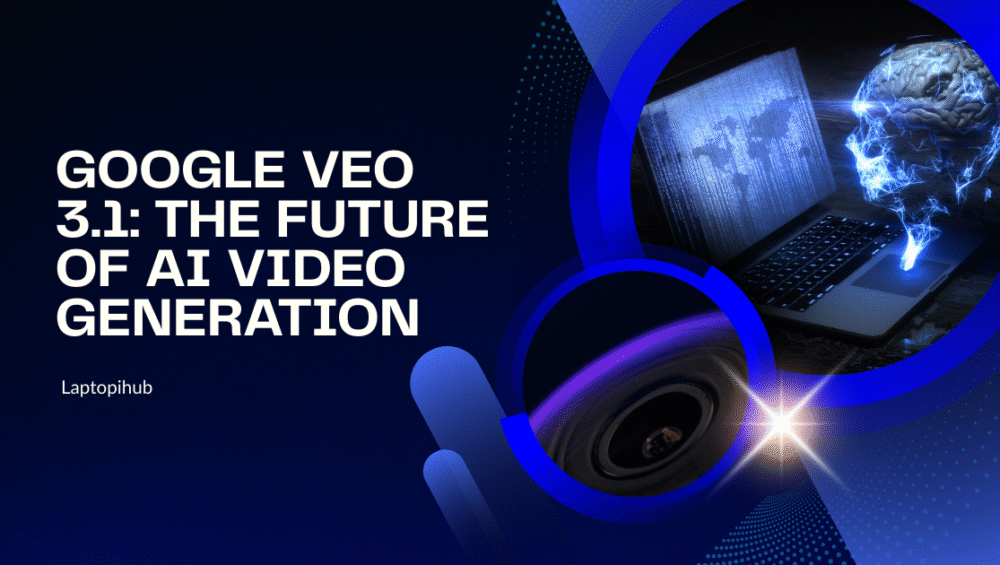
Google Veo 3.1 is Google’s advanced AI video generator delivering cinematic, high-quality videos from simple text prompts.
Introduction to Google Veo 3.1
Imagine typing a few lines of text and watching them turn into a cinematic-quality video. Sounds like science fiction, right? Well, with Google Veo 3.1, that future is knocking on our doors right now. Google’s latest advancement in AI-powered video generation is pushing creative boundaries and redefining how videos are made.
Whether you’re a content creator, marketer, filmmaker, or just an AI enthusiast, Google Veo 3.1 feels like a powerful camera placed directly inside your imagination.
What Is Google Veo? A Quick Recap
Before diving into version 3.1, let’s rewind a little. Google Veo is an advanced AI video generation model developed by Google DeepMind. Its core purpose is simple but revolutionary: transform text prompts into high-quality, realistic videos.
Think of it as DALL·E for videos—but smarter, smoother, and more cinematic.
Evolution of Google Veo Technology
Google Veo didn’t become powerful overnight. Earlier versions focused on basic motion, short clips, and simple scenes. With each update, Google improved realism, camera movement, lighting, and consistency. Veo 3.1 represents a significant leap, like upgrading from a basic phone camera to a professional cinema rig.
Why Google Veo Matters in the AI World
AI-generated videos are the next big thing. Text, images, and audio were just the warm-up. Video is the final boss. Google Veo 3.1 matters because it makes high-quality video creation accessible, fast, and scalable—no expensive gear or editing skills required.
What’s New in Google Veo 3.1
So, what makes Veo 3.1 special? Short answer: polish, power, and precision.
Major Upgrades from Previous Versions
Google Veo 3.1 introduces smoother transitions, longer video coherence, and more accurate interpretations of complex prompts. You’re no longer fighting the AI to “understand” your idea—it feels like a creative partner.
Improved Video Realism and Motion Accuracy
Motion in Veo 3.1 feels natural. Characters move like real humans, objects follow physics, and scenes flow smoothly. No more robotic movements or awkward cuts. It’s like watching a short film instead of an AI experiment.
Advanced Scene Understanding
Veo 3.1 understands environments better. A “sunset beach scene” actually looks like golden-hour lighting with realistic reflections, shadows, and atmosphere.
Better Object Consistency Across Frames
One of the biggest challenges in AI video is consistency. Veo 3.1 keeps characters, objects, and environments stable across frames—no more disappearing hands or morphing faces.
Core Features of Google Veo 3.1
Let’s break down the powerhouse features that make Veo 3.1 stand out.
Text-to-Video Generation
Just type what you imagine. Whether it’s “a drone shot over snowy mountains” or “a cinematic city chase at night,” Veo 3.1 turns words into visuals like magic.
Cinematic Camera Controls
Veo understands camera language. You can request close-ups, wide shots, slow pans, or dynamic movements. It’s like directing a virtual film crew that never gets tired.
High-Resolution Output Capabilities
Google Veo 3.1 delivers high-resolution videos with impressive detail, making it suitable for professional use in marketing, social media, and even filmmaking concepts.
How Google Veo 3.1 Works
Behind the scenes, Veo 3.1 is a beast of machine learning.
AI Models Behind Veo 3.1
It’s powered by large-scale diffusion and transformer-based models trained on massive multimodal datasets. In simple words? It learns how the world looks, moves, and behaves.
Role of Large Multimodal Models
Veo doesn’t just read text—it understands context, emotion, and intent. That’s why prompts feel “understood” instead of mechanically followed.
Google Veo 3.1 vs Other AI Video Tools
Competition is heating up in the AI video space.
Comparison with OpenAI Sora
While OpenAI Sora focuses heavily on realism and long-form coherence, Google Veo 3.1 shines in cinematic control and visual polish. It feels more like a director’s tool.
Veo 3.1 vs Runway and Pika Labs
Runway and Pika are excellent for quick social content, but Veo 3.1 is built for quality-first creation. Think short films versus quick TikToks.
Use Cases of Google Veo 3.1
This is where things get exciting.
Content Creation and YouTube Videos
Creators can generate B-roll, intros, or even entire story visuals without filming a single frame.
Marketing and Advertising
Agencies can test multiple ad concepts quickly, saving time and money while boosting creativity.
Film, Animation, and Storyboarding
Veo 3.1 is perfect for pre-visualization. Directors can see scenes before they ever hit a real set.
Education and Training Videos
Complex topics become easier to understand with visually rich AI-generated explanations.
Benefits of Using Google Veo 3.1
Why are people excited? Let’s sum it up.
Time-Saving for Creators
What once took weeks can now be done in minutes.
Cost-Effective Video Production
No cameras, no crews, no locations—just ideas and prompts.
Creative Freedom Without Technical Barriers
You don’t need to be a video editor or filmmaker. If you can imagine it, you can create it.
Limitations and Challenges
Of course, it’s not perfect.
Ethical Concerns and Deepfakes
AI video raises serious questions about misinformation and misuse. Responsible usage is crucial.
Accessibility and Availability Issues
Google Veo 3.1 is still limited in access, and not everyone can use it just yet.
Future of Google Veo and AI Video
So, where does this road lead?
What to Expect After Veo 3.1
Expect longer videos, real-time editing, and even better realism in future updates.
Impact on the Creative Industry
AI won’t replace creators—it will supercharge them. Those who adapt early will have a massive advantage.
Conclusion
Google Veo 3.1 is more than just another AI tool—it’s a glimpse into the future of storytelling. By combining cinematic quality with AI efficiency, Google has created something truly powerful. While challenges remain, one thing is clear: video creation will never be the same again. The camera is no longer in your hands—it’s in your words.
FAQs
1. What is Google Veo 3.1 used for?
Google Veo 3.1 is used to generate high-quality videos from text prompts for content creation, marketing, education, and filmmaking.
2. Is Google Veo 3.1 better than previous versions?
Yes, Veo 3.1 offers improved realism, smoother motion, better consistency, and more cinematic control.
3. Can beginners use Google Veo 3.1?
Absolutely. No technical or video editing skills are required—just creativity.
4. Is Google Veo 3.1 available to everyone?
Currently, access is limited, but broader availability is expected in the future.
5. Will Google Veo replace human video creators?
No. It’s a creative assistant, not a replacement. Human ideas still drive the best results.